Is Aadhaar Mandatory for Mobile SIM in India? Clear Guide
Aadhaar is not mandatory for getting a mobile SIM in India. Many users search whether aadhaar mandatory for mobile sim verification is a legal rule, but Aadhaar is only a voluntary KYC option. Mobile users can use Aadhaar as a KYC document, and Aadhaar UIDAI guidelines also support consent-based identity verification.
SIM card KYC is still required because telecom companies must verify the identity of a subscriber before activating a mobile connection. Aadhaar is one convenient option, but it is not the only way to prove identity. The main rule is simple: KYC is mandatory, but Aadhaar is not mandatory.
Direct answer
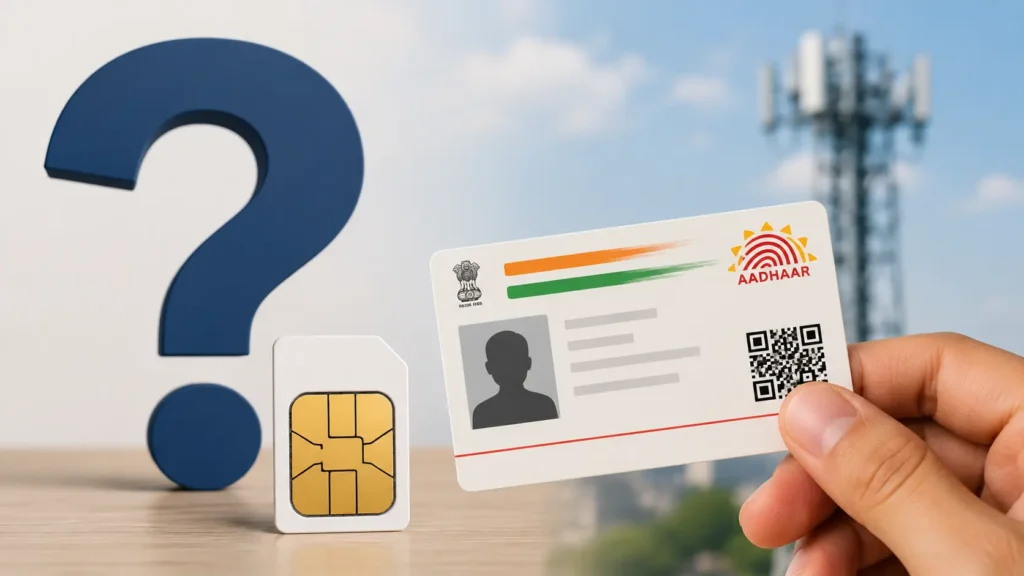
No, Aadhaar is not compulsory for buying a new SIM card. Many people ask whether aadhaar mandatory for mobile sim activation is required, but a customer may choose Aadhaar only for faster digital KYC. The telecom provider should also allow other valid Proof of Identity documents where applicable. Sanchar Saathi also states that re-verification can be completed with any specified PoI document, and the same document used at the time of original SIM purchase is not required.
Aadhaar is commonly preferred because it helps verify subscriber identity quickly and reduces the chances of fake SIM registration. Verified mobile numbers linked with strong identity checks help identify people who misuse disposable mobile numbers for fraud, crime, or money laundering. This security purpose explains why many telecom stores ask for Aadhaar first, even though Aadhaar is not the only valid route.
Aadhaar use in SIM KYC
Aadhaar can be used for SIM KYC when the customer gives consent. Many users think aadhaar mandatory for mobile sim KYC is a fixed requirement, but Aadhaar-based verification works only as a voluntary option. The verification may happen through Aadhaar-based authentication or through Aadhaar offline verification, depending on the process available with the telecom operator.
Aadhaar offline e-KYC can protect privacy because the Aadhaar number itself is not revealed in the shared file. The offline e-KYC system shares a reference ID instead of the Aadhaar number, and no core biometrics such as fingerprints or iris data are required for offline verification. The Aadhaar holder can also choose which available details are shared during the process.
Other documents for SIM card verification
Aadhaar is not the only document that may be used for mobile SIM verification. A customer can generally use another accepted Proof of Identity or Proof of Address document, depending on the telecom company’s current KYC process and DoT instructions. Commonly used documents include voter ID, passport, driving licence, PAN card, and other officially accepted identity documents.
Customers should carry original documents because telecom KYC usually checks the person’s identity against the submitted proof. Some telecom stores may ask for Aadhaar because it is quicker, but a customer can ask for the alternate KYC process if they do not want to use Aadhaar. The final document acceptance may depend on updated operator systems, location, and category of connection.
Why telecom companies prefer Aadhaar
Telecom companies often prefer Aadhaar because it speeds up verification and reduces manual errors. Aadhaar QR code contains digitally signed demographic details and a photograph, which can help detect tampering when Aadhaar is used for offline verification. This makes Aadhaar a strong document for identity checks without making it legally compulsory for every SIM buyer.
Government telecom reforms also focus on reducing fraud through stronger KYC. KYC helps uniquely identify a telecom customer and supports traceability before telecom services are provided. Updated telecom safety measures also include QR-based Aadhaar checks, complete KYC for SIM replacement, and a temporary SMS restriction after SIM swap or replacement.
SIM replacement and re-verification
SIM replacement has stricter checks because fraudsters often misuse duplicate SIMs for banking fraud, OTP theft, and account takeover. A subscriber must complete KYC again when replacing a SIM, and telecom rules include a temporary 24-hour restriction on SMS services after replacement. This measure helps reduce the risk of immediate misuse after a duplicate SIM is issued.
Re-verification can also happen when a mobile number is reported as not required or not acquired by the real subscriber on Sanchar Saathi. In that case, the service provider checks the subscriber’s photograph and Proof of Identity document against existing records. If re-verification fails, the connection may be disconnected by the telecom provider.
Privacy and consent
Aadhaar use for SIM verification should be based on consent. Mobile companies cannot store or use biometrics collected during Aadhaar verification for other purposes. Aadhaar authentication rules also restrict requesting entities from storing or sharing fingerprint data.
Customers who are concerned about privacy can ask for non-Aadhaar KYC or offline Aadhaar verification where available. Offline e-KYC can reduce exposure because it lets the Aadhaar holder share a digitally signed identity file instead of giving a photocopy or revealing the Aadhaar number directly. This approach supports verification while keeping more control with the user.
What customers should do
A customer buying a new SIM should first ask the telecom store which KYC options are available. Aadhaar can be selected for convenience, but the customer should not feel forced to use Aadhaar when an alternate KYC route is available. A customer should also avoid sharing Aadhaar photocopies casually and should prefer QR-based or official digital verification methods where possible.
A customer should use Sanchar Saathi to check mobile connections issued in their name. The portal allows users to report numbers that are not theirs or are no longer required, and those numbers are then flagged for service-provider re-verification. This is useful for preventing unknown SIMs from remaining active under a person’s identity.
FAQs
Final Thoughts
Aadhaar is not mandatory for getting a mobile SIM, but KYC verification is mandatory. Customers can use Aadhaar for faster verification, or they can choose another accepted identity document if they do not want to share Aadhaar. The best approach is to understand the available KYC options, use only official verification methods, and avoid sharing personal documents with unverified agents.
Aadhaar-based KYC remains useful because it helps reduce fake SIMs, identity misuse, mobile fraud, and duplicate connection risks. Non-Aadhaar KYC also remains important because customers should have a choice in how they verify their identity. A safe SIM purchase depends on verified documents, customer consent, and responsible handling of personal information.