UIDAI Full Form: Mission, Objectives & Aadhaar Explained
India, with its vast population and diverse needs, has long faced challenges in providing accessible and secure identity verification for its residents. The Unique Identification Authority of India (UIDAI), created in 2009, has played a monumental role in transforming the landscape of identity verification through the Aadhaar UIDAI system. UIDAI is not just a governmental body; it is the backbone of a revolution in how residents of India interact with government services, financial institutions, and more.
In this article, we will delve deep into the UIDAI full form, its mission, objectives, and impact, as well as the profound influence of Aadhaar UIDAI on Indian society. We will also explore the challenges, criticisms, and future directions of the UIDAI initiative, shedding light on its pivotal role in shaping India’s future in a digital age.
UIDAI Full Form: Understanding Its Role in Modern India
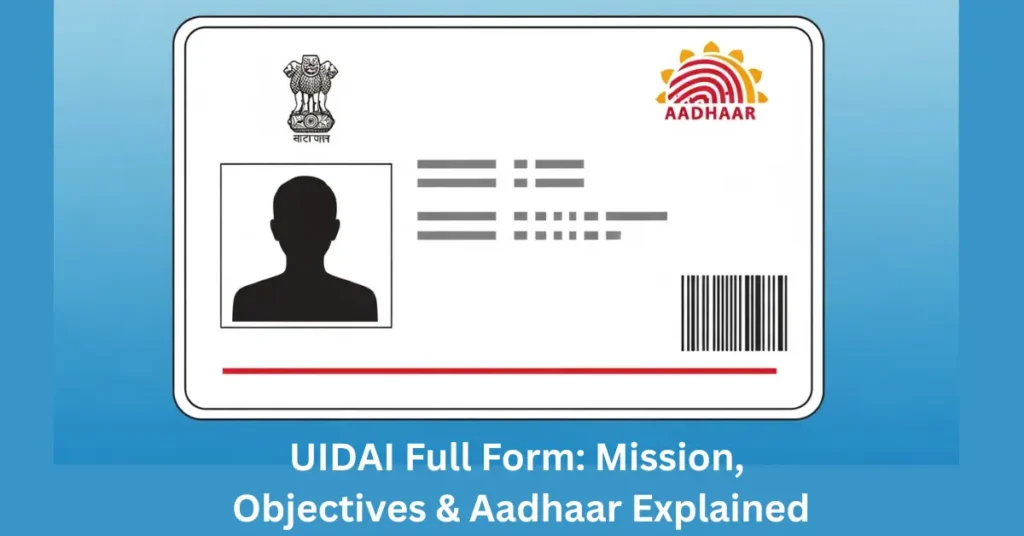
UIDAI full form, which stands for the Unique Identification Authority of India, is a statutory authority established by the Indian government. The foundation for UIDAI was laid under the Aadhaar Act of 2016, and it operates under the administrative control of the Ministry of Electronics and Information Technology (MeitY). The primary goal of UIDAI is to issue Aadhaar numbers, a 12-digit unique identification code, to every resident of India. These numbers serve as both identity and address proof, and they are the most widely used identification tool in India today.
UIDAI is tasked with overseeing the entire Aadhaar process, from biometric and demographic data collection to issuance and maintenance of the Aadhaar database. The system has become a universal proof of identity that facilitates residents’ access to public services, financial benefits, and social security schemes, among others.
The Mission of UIDAI: Empowering Residents with Secure Identity
UIDAI’s mission is built upon the foundation of three core pillars:
The overarching goal of UIDAI is to make it easier for Indian residents to assert their identity with confidence, opening doors to services and benefits that contribute to their social and economic empowerment.
Key Objectives of UIDAI
UIDAI’s mission is further strengthened by a set of well-defined objectives that guide its activities:
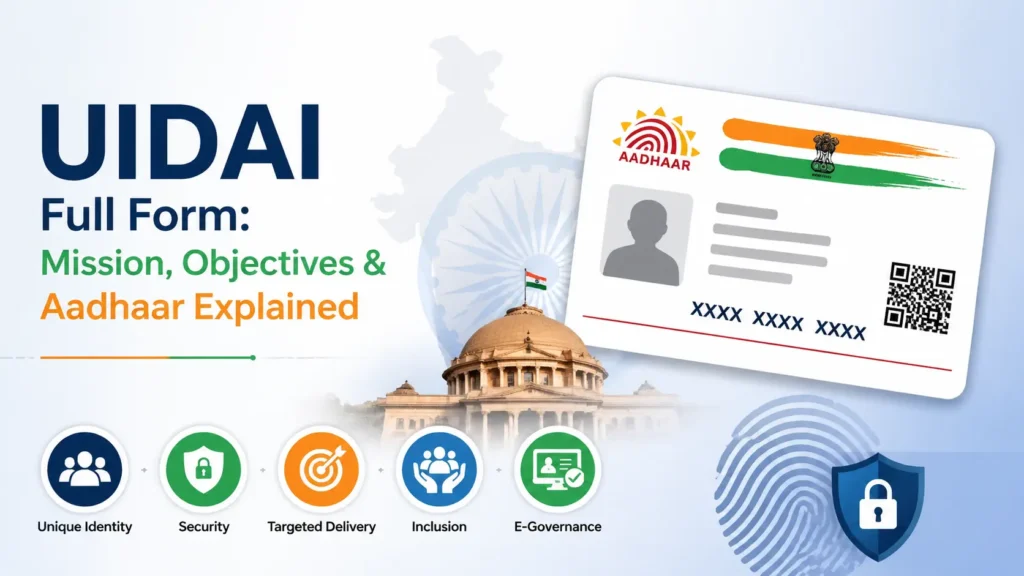
1. Unique Identification
The first and most important objective of UIDAI is to provide each Indian resident with a unique identification number, known as Aadhaar. This number is not just a random figure but serves as a reliable proof of identity and address.
2. De-duplication and Data Accuracy
To ensure that each Aadhaar number is unique and that there is no duplication in the system, UIDAI employs advanced technologies like biometric data verification (fingerprints, iris scans) and demographic data cross-checking. This ensures that no individual has more than one Aadhaar number.
3. Authentication Services
UIDAI provides authentication services to authorized entities that need to verify the identity of an individual. The system allows government agencies, banks, service providers, and others to validate an individual’s Aadhaar number, enabling them to access services efficiently and securely.
4. Targeted Service Delivery
One of UIDAI’s major contributions has been its role in enabling the targeted delivery of services. By linking Aadhaar numbers to various government schemes, UIDAI ensures that benefits reach the intended recipients without interference or misallocation. This is especially important in the distribution of subsidies and welfare programs.
5. Inclusion and Empowerment
UIDAI seeks to promote financial and social inclusion. The Aadhaar system provides a universal identification that helps marginalized communities, including tribals, migrants, and people in rural areas, access essential government services and financial systems that they might otherwise be excluded from.
6. Security and Privacy
A core objective of UIDAI is to ensure that Aadhaar data remains secure and private. The agency has implemented robust data protection mechanisms to safeguard personal information, preventing unauthorized access and ensuring compliance with privacy regulations.
7. Facilitation of E-Governance
UIDAI is at the heart of India’s e-governance initiatives. By providing a reliable identity platform, Aadhaar enables digital transactional services such as online tax filing, mobile phone verification, and government form submission, making these processes more efficient and transparent.
The Aadhaar System: A Landmark in Identity Verification
The Aadhaar system has emerged as one of the largest biometric identification systems globally, with over 1.2 billion Aadhaar numbers issued to date. It consists of three main components:
1. Demographic Information
This includes basic data such as the individual’s name, date of birth, gender, and address. This information serves as the foundation for the Aadhaar number.
2. Biometric Data
To ensure accuracy and security, Aadhaar includes biometric details like fingerprints and iris scans. These are unique to each individual and are used for authentication during various services.
3. Aadhaar Number
This is a 12-digit unique identification number assigned to each resident. The Aadhaar number is central to India’s identity verification system and is linked to multiple services.
The Reach and Impact of Aadhaar
Financial Inclusion
Aadhaar has played a transformative role in financial inclusion. With over 300 million unbanked individuals in India, Aadhaar has provided a means to open bank accounts, access microfinance services, and receive direct benefits through Aadhaar-enabled payment systems (AEPS). The government has also used Aadhaar to link bank accounts to ensure subsidy transfers, reducing the risk of fraud.
Government Services
Aadhaar has revolutionized the delivery of government services. Programs such as Direct Benefit Transfers (DBT), welfare programs, and subsidy distributions have been significantly enhanced, ensuring that the benefits reach the right people directly into their bank accounts.
Digital Identity
Aadhaar has also become the gold standard for digital identity verification in India. It is now used for various purposes, including:
Criticisms and Challenges of the Aadhaar System
While Aadhaar has brought about significant transformations, it has not been without its fair share of criticisms:
The Future of UIDAI and Aadhaar
UIDAI continues to evolve with the growing needs of digital India. In the coming years, UIDAI will focus on:
FAQs
Final Thoughts
UIDAI’s Aadhaar system is a game-changer in India’s identity verification process. By providing unique identification numbers to every resident, Aadhaar has empowered millions with access to financial services, government schemes, and digital platforms. While it has faced challenges, Aadhaar’s positive impact on financial inclusion, government efficiency, and digital identity cannot be overstated. As India continues its digital transformation, UIDAI’s role will be critical in ensuring that Aadhaar remains an inclusive, secure, and reliable identity verification tool for the future.