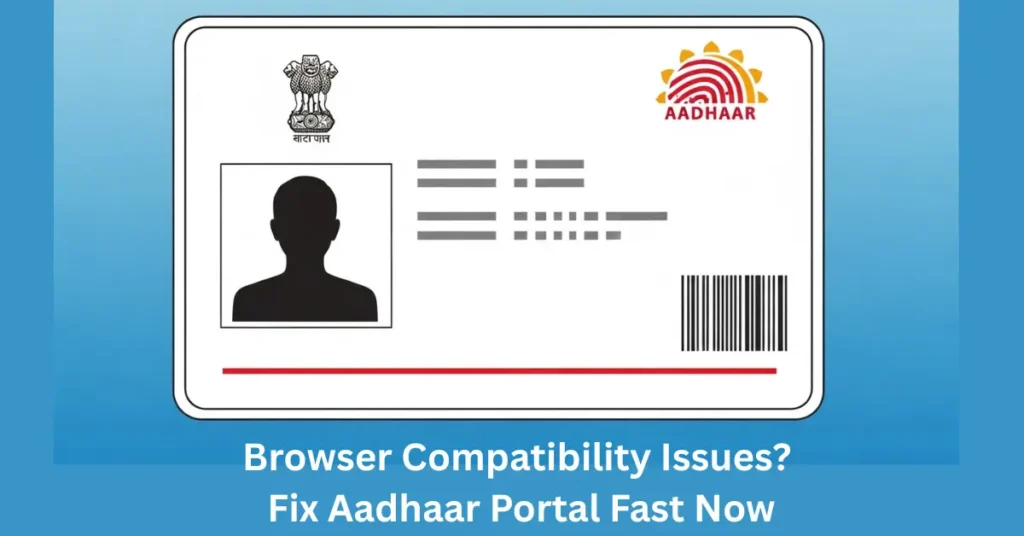
Browser Compatibility Issues? Fix Aadhaar Portal Fast Now
Accessing the Aadhaar UIDAI portal should be straightforward, but many users get frustrated due to browser compatibility issues, where pages don’t load, buttons don’t respond, or OTPs fail. These problems often occur on specific devices or browsers, making the portal seem confusing. The good news is that most of these issues are easy to fix once you understand why they happen.
This article will explain in detail why the Aadhaar portal might not work on some devices, how browser compatibility issues affect access, and practical solutions to get it working reliably. We will also cover common troubleshooting steps and tips to prevent problems in the future.
Understanding Browser Compatibility
Browser compatibility refers to whether a website works correctly on the browser and device you are using. Websites are built using modern coding technologies, and not all browsers or devices interpret this code in the same way. When there is a mismatch, the website might load incorrectly or fail to respond.
The Aadhaar portal is designed with secure login processes, encryption, dynamic scripts, and cookies. While these features protect your data and provide a smooth user experience for most users, they can also cause issues on older devices or browsers that do not support modern web standards. Common problems caused by browser compatibility issues include:
Understanding this helps you know whether the issue is with your device, your network, or the portal itself.
Major Causes of the Aadhaar Portal Not Working
There are several reasons why the portal may fail on certain devices. Let’s go through each one in detail and explore practical solutions.
1. Outdated or Unsupported Browsers
One of the most common reasons the Aadhaar portal does not function properly is that the browser you are using is outdated or unsupported. Browsers are regularly updated to handle new web technologies, improve security, and support encryption protocols. If your browser is old, it may not understand or display the portal correctly. Symptoms of this problem include:
Solutions:
Switching to a modern browser often solves the problem immediately.
2. Cached Data and Cookies
Browsers store cached files and cookies to speed up loading and remember login sessions. However, these stored files can sometimes become outdated or corrupted, causing conflicts with websites like the Aadhaar portal. Problems caused by stale cache and cookies include:
Solutions:
Clearing the cache ensures that your browser loads the latest version of the portal without interference from outdated data.
3. High Traffic and Server Load
The Aadhaar portal receives millions of visitors every day. During peak hours, such as when new services are launched or during government notifications, the servers can become overloaded. This may result in slow page loads, timeouts, or errors. Signs of server load issues:
Solutions:
Server-related issues are typically temporary and resolve once traffic decreases.
4. Internet Connectivity Problems
An unstable or slow internet connection can interfere with the portal’s ability to load pages or complete authentication. This is especially true for mobile users with weak signals or for users on congested networks. Common symptoms of connectivity issues:
Solutions:
Improving network stability often fixes most loading and authentication issues.
5. VPNs and Network Restrictions
Users who access the portal through VPNs or restricted networks may face access issues. VPNs can change your IP address and location, which sometimes triggers security protocols on government portals. Similarly, firewalls on institutional networks may block certain connections needed for secure access.
Solutions:
Accessing the portal from a home network or mobile data connection is often the fastest way to resolve these problems.
6. Device Compatibility Problems
Older devices, including phones, tablets, and laptops, may not fully support modern web standards or security protocols. This can lead to issues with secure logins, encrypted connections, or interactive forms. Signs of device compatibility problems:
Solutions:
Devices that are too old may struggle regardless of browser or connection, so switching to a newer device is sometimes necessary.
7. Incognito or Private Browsing
Browser extensions, plugins, or stored settings can sometimes interfere with website functionality. Using the portal in Incognito or Private mode disables extensions and starts a fresh session, which can help resolve many issues.
How to use Incognito/Private mode:
This method provides a clean environment for accessing the portal without clearing your regular browser data.
8. OTP and Authentication Failures
Even if the portal loads successfully, issues often occur at the OTP (One-Time Password) stage. OTP failures may happen due to network delays, incorrect mobile numbers, or temporary SMS issues. Common OTP-related problems:
Solutions:
Maintaining accurate contact information ensures smooth authentication.
9. Security Certificates and Encryption Errors
Government portals rely on secure encryption protocols to protect sensitive information. Outdated browsers or incorrect system settings can trigger warnings about invalid security certificates. Symptoms include:
Solutions:
Updating your browser and system ensures compatibility with encryption protocols and secure certificates.
10. Backend Technical Bugs
Sometimes the portal itself experiences temporary glitches or errors that can mimic browser compatibility issues. These include server timeouts, download failures, or synchronization problems in the backend.
Examples:
Solutions:
Ensure your system and browser are up to date to minimize compatibility issues.an cause big visible issues for users. Different engines, different habits — that’s why what works in Chrome isn’t guaranteed to work in Safari or Firefox.
Real-World User Experiences
Many users report that the portal works inconsistently. Common patterns include:
These experiences confirm that compatibility, connectivity, and device issues are common causes rather than permanent problems with user accounts.y.
Troubleshooting Checklist for Browser Compatibility Issues
Here’s a practical checklist you can follow:
- Update your browser to the latest version.
- Clear browser cache and cookies.
- Try accessing the portal on another browser.
- Switch between Wi-Fi and mobile data.
- Disable VPNs or network firewalls.
- Use Incognito or Private mode.
- Access the portal from a different device.
- Verify registered mobile number for OTP.
- Retry at a different time if the server is busy.
- Update your device software to ensure compatibility.
Following these steps resolves the majority of issues for most users.
Tips for Smooth Portal Access
Top 5 Quick Fixes
If you need the fastest solutions, try these first:
- Update or switch your browser.
- Clear cache and cookies.
- Disable VPN or network restrictions.
- Switch internet connections.
- Use Incognito/Private mode.
These five steps resolve most issues within minutes.
FAQs
Final Thoughts
The Aadhaar portal may not work on some devices due to browser compatibility, network issues, device limitations, or temporary server problems. Understanding the underlying causes helps you troubleshoot efficiently. With the right steps, most users can regain access quickly without frustration. Remember:
Most issues are temporary or fixable. Device updates, browser updates, and proper network connections solve the majority of problems. Authentication, OTP, and security checks are often the final hurdles, but they can be managed with accurate information and patience. By following the steps outlined above, users can access the Aadhaar portal reliably and confidently, regardless of device or browser.