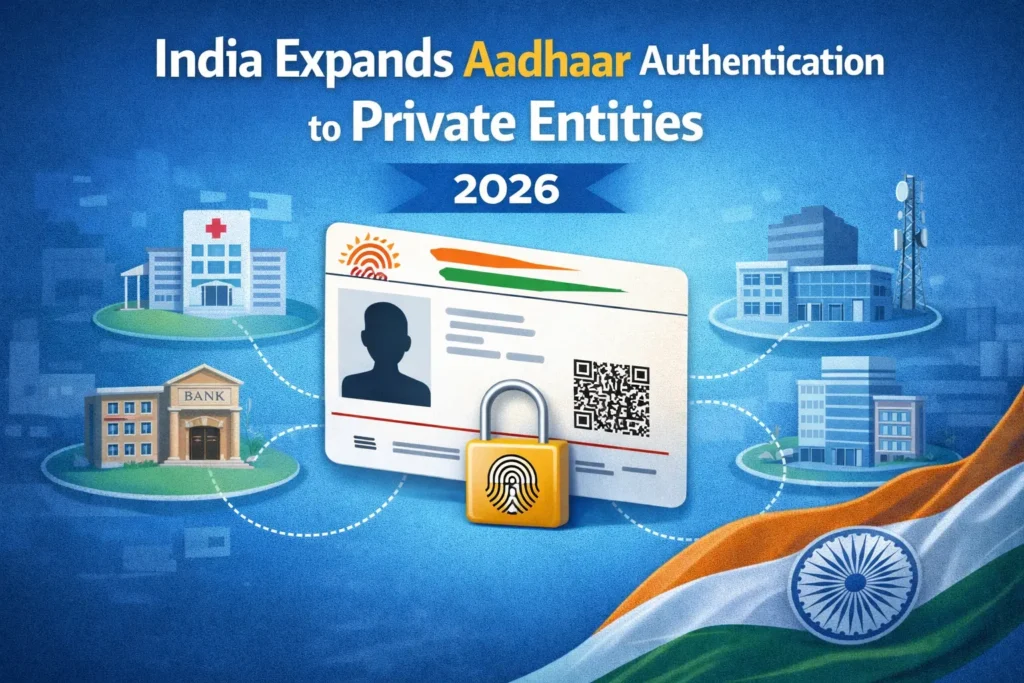
India Expands Aadhaar Authentication to Private Entities2026
In a major digital identity reform, the Government of India has expanded Aadhaar authentication access to both public and private entities as part of the Aadhaar Authentication for Good Governance (Social Welfare, Innovation, Knowledge) Amendment Rules, 2025, fully implemented in 2026.
This development aims to modernize Aadhaar UIDAI digital identity verification, streamline services, enhance security, and boost technology-driven innovation across sectors nationwide. The policy marks a significant evolution from the earlier restrictions placed on private access, balancing digital growth with privacy compliance and robust oversight.
What Is Aadhaar Authentication?
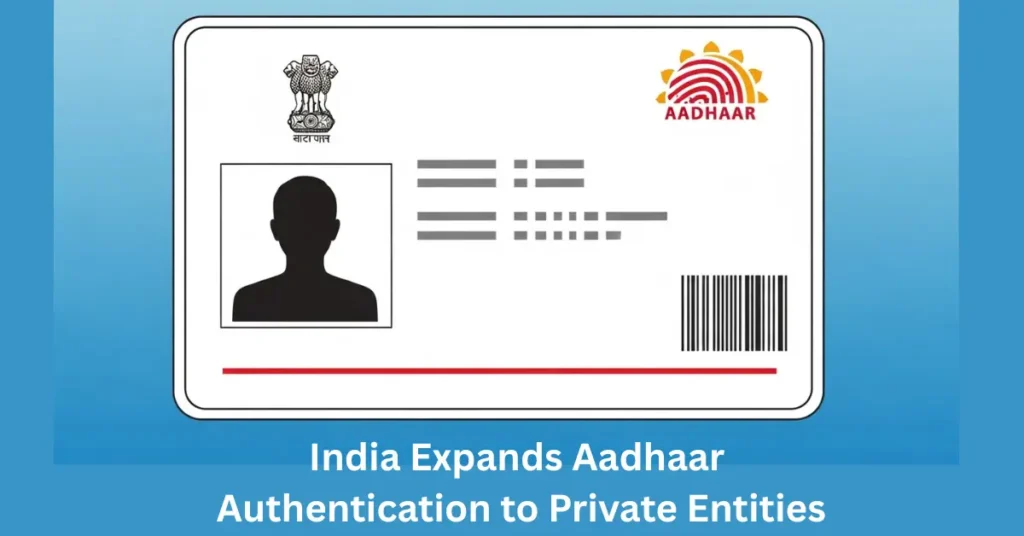
Aadhaar Authentication is a digital identity verification process where a user’s Aadhaar number — combined with biometric (fingerprint/iris) or demographic details — is verified against the Central Identities Data Repository (CIDR) managed by the Unique Identification Authority of India (UIDAI).
It serves as a trusted mechanism for confirming identity during digital interactions, such as financial transactions, service registrations, and more. Authentication confirms “you are who you say you are,” and this verification is increasingly important as digital services expand.
Until recently, Aadhaar digital authentication access for private businesses was limited because of past privacy and legal concerns. However, the 2025 amendment, enacted in early 2026, opens up this capability under structured safeguards.
Why This Amendment Matters (2026 Update)
The 2026 amendment represents a major policy change designed to achieve several objectives:
1. Improved Access & Ease of Living
Allowing both public and private entities to request Aadhaar digital authentication supports faster, more secure access to services in areas such as healthcare, banking, e‑commerce, hospitality, travel, and more. This enhances user convenience and reduces identity verification delays for citizens.
2. Boost to Digital Innovation
By opening authentication to private companies, the government aims to stimulate innovation in digital platforms. Developers and service providers can build new solutions that leverage Aadhaar for onboarding, fraud reduction, remote verification, and personalised service delivery.
3. Strengthening Governance
The expansion supports the government’s vision of Good Governance by making digital interactions more transparent, efficient, and inclusive — ensuring residents across regions can access services more reliably.
4. Enhanced Trust & Security
With a verified central identity source, both users and service providers receive increased confidence that the identities being processed are authentic, reducing cases of fraud and impersonation.
How Aadhaar digital Authentication Works for Private Entities
Private organisations cannot simply start using Aadhaar right away. They must follow a structured approval process to ensure data safety and compliance:
1. Submit a Proposal
Entities must provide a detailed request to the relevant Central or State Government ministry explaining how they plan to use Aadhaar digital authentication and for what public‑interest purposes.
2. Review by UIDAI
The Unique Identification Authority of India examines the application to ensure it meets all privacy, security, and legal requirements. Only after UIDAI vetting will the case move forward.
3. Final Approval
Based on UIDAI’s recommendation, MeitY grants final approval. Approved entities are authorised to access Aadhaar digital authentication services via secure channels and platforms — most commonly through the Aadhaar Good Governance Portal.
4. Notification & Onboarding
Once approved, the concerned ministry or department formally notifies the entity, enabling them to begin Aadhaar integration in their services.
The Aadhaar Good Governance Portal: Simplifying Access
To streamline applications and approvals, MeitY launched the Aadhaar Good Governance Portal, an online platform where organisations can:
This portal is a critical tool for ensuring the framework remains consistent, secure, and easy to use for both government and private players.
Where Aadhaar digital Authentication Will Be Used
This expansion unlocks Aadhaar verification across a wide spectrum of sectors, including:
Healthcare
Hospitals, telemedicine services, and digital health platforms can securely authenticate patients and ensure data accuracy without reliance on physical records.
Banking & Finance
Financial institutions can reduce onboarding friction, streamline KYC processes, and detect fraudulent accounts more effectively.
E-commerce & Travel
Platforms can accelerate user onboarding and transaction verification, reducing checkout friction and improving user trust.
Hospitality & Tourism
Hotels and travel operators can provide quicker identity validation during check‑ins or bookings, enhancing customer experience.
Education
Institutions can authenticate learner identities for digital examination registrations, certification issuance, and attendance systems.
Privacy: Safeguards and Concerns
Though this expansion aims to make digital identity more accessible, it also raises important privacy and data security questions. Experts note that:
These safeguards help balance accessibility and innovation with individual rights and data protection. Many organisations and legal analysts emphasize that enforcing privacy compliance will be key to public trust and long‑term success.
The Future of Aadhaar & Digital Identity in India
Aadhaar isn’t just an authentication tool — it’s the backbone of India’s digital public infrastructure (DPI), supporting systems like UPI, DigiLocker, and many e‑governance services. Its continued evolution reflects India’s broader push toward seamless, paperless, and citizen‑centric digital experiences.
Monthly Aadhaar authentication transactions continue to grow, reaching record levels, highlighting how deeply the system is integrated into daily digital life.
Aadhaar in Everyday Life (2026)
Today, Aadhaar authentication touches millions of ordinary transactions. From digital banking logins and online bill payments to accessing public services, Aadhaar’s role as a trusted digital identity is growing.
With this 2026 expansion, Aadhaar is set to become even more deeply integrated into citizen touchpoints, further enabling India’s digital economy.
FAQs
Final Thoughts
The expansion of Aadhaar authentication represents a significant milestone in India’s digital transformation journey. This policy strikes a balance between several key elements: it enhances digital convenience and ease of living, fosters innovation across both public and private sectors, strengthens security and privacy safeguards, and establishes a structured, transparent approval process. By allowing private sector access to regulated Aadhaar authentication, India is paving the way for trusted, secure digital identity services, which could soon become the standard for millions of users across the country.