Aadhaar-Voter ID Linking: Boosting Electoral Integrity 2026
Aadhaar-Voter ID Linking is a significant proposal aimed at enhancing India’s democratic system by ensuring accurate voter lists and credible electoral processes. The initiative to link the Aadhaar card with the Voter ID card (Electoral Photo Identity Card or EPIC) has emerged as one of the most discussed electoral reforms in recent times.
Framed as an effort to reduce fraud, streamline voter registration, and enhance transparency, this initiative has sparked legal, technical, and political debates across the nation. The Aadhaar UIDAI system plays a crucial role in ensuring secure identity verification for voters. This article explains what Aadhaar-Voter ID Linking means, how it may be implemented, its benefits, concerns raised by experts and activists, legal background, technical process, and the future outlook of this initiative in India’s electoral landscape.
Introduction: The Concept Behind Aadhaar-Voter ID Linking
The Government of India, in consultation with the Election Commission of India (ECI) and the Unique Identification Authority of India (UIDAI), has proposed linking Aadhaar numbers with electoral roll details. The primary goal is to ensure that every eligible voter is registered once and only once, thereby minimizing duplicate or fraudulent entries that could otherwise distort election outcomes.
While this move is currently voluntary, it signifies a significant shift in how electoral data is managed. Ensuring the integrity of the voter registry is critical to a functioning democracy, and linking these two major databases is seen by proponents as a powerful tool for electoral accuracy and administration efficiency.
Why Link Aadhaar with Voter ID? Key Rationale
Several motivations underlie this proposal — from cleaning up electoral rolls to improving confidence in the voting process.
Eliminating Duplicate or Bogus Voter Registrations
One of the most persistent issues in Indian voter lists is the presence of duplicate registrations. Individuals may be registered multiple times under different constituencies or even within the same area. This raises the specter of possible electoral fraud and undermines the credibility of the voting system.
Linking Aadhaar with voter details can help confirm that each unique individual appears in electoral records only once, reducing discrepancies and potential misuse.
Improving Electoral Integrity and Data Accuracy
Electoral integrity depends on accurate data. When voter lists contain outdated or incorrect information, it not only leads to administrative challenges but also weakens public trust.
By integrating Aadhaar’s biometric‑based identity verification with the voter database, the ECI hopes to enhance the quality of electoral rolls, reduce clerical errors, and make roll maintenance more dynamic and dependable.
Streamlining Administrative Processes
Election officials often face logistical difficulties in managing voter data across states and constituencies. A unified framework between Aadhaar and voter IDs can reduce time‑consuming manual verification, ensuring smoother roll revision and election conduct.
Legal and Constitutional Framework
Any linkage between Aadhaar and voter registration must align with India’s constitutional principles and electoral laws.
Constitutional Guarantees and Restrictions
The Indian Constitution (Article 326) grants every Indian citizen the right to vote, subject to age and other eligibility conditions. Aadhaar, however, does not serve as proof of citizenship — only as an identity document with demographic and biometric attributes. Therefore, any electoral reform involving Aadhaar must ensure it does not infringe on the fundamental right to vote.
Representation of the People Act and Amendments
The Representation of the People Act, 1951 was amended in 2021 to permit the collection of Aadhaar details for the purpose of voter verification. At the same time, the law reaffirmed that linking Aadhaar with voter ID remains optional. Officials have highlighted that failure to provide Aadhaar should not lead to denial of voting rights or removal from rolls.
Voluntary Nature and Legal Safeguards
Sections within the existing electoral laws — particularly Sections 23(4), 23(5), and 23(6) — emphasize the voluntary nature of this process. Voters who choose not to link their Aadhaar are not to be disenfranchised or excluded from electoral participation.
How the Linking Process Works: Technical Overview
Linking Aadhaar with the voter list isn’t as simple as entering numbers into a form — certain technical and procedural steps need attention.
Digitizing and Matching Databases
The first major task for election authorities is securely matching the Aadhaar database with South Asia’s largest electoral registry. UIDAI’s biometric and demographic data makes it powerful for verification, but concerns about security and privacy have led to detailed technical consultations between ECI and UIDAI teams.
Form 6B and Registration Options
To provide Aadhaar information, voters must use an official form, typically Form 6B. The Election Commission has proposed enhancing this form so that voters can also specify reasons for choosing not to link, reinforcing the voluntary nature of the process.
Multiple Submission Channels
Beyond online submission through the official voter portal, Aadhaar information can be provided via the Voter Helpline mobile app, SMS, or offline submission at electoral offices depending on ease and access for the citizens.
Security and Authentication Layer
To maintain data integrity, most online submissions require OTP (One Time Password) authentication tied to the voter’s registered mobile number; this adds an additional layer of verification.
Key Advantages of Aadhaar-Voter ID Linking
Robust Voter Verification
Aadhaar uses biometric identification (fingerprints and iris scans), which helps make voter verification more accurate than demographic data alone. This is significant for cleaner electoral rolls, especially in regions with large population diversity.
Reduction in Electoral Fraud
The expectation is that Aadhaar linking will substantially minimize instances where individuals vote multiple times or fraudulent records are created — thereby bolstering public confidence in election outcomes.
Administrative Efficiency
Election departments can maintain and update voter information with greater speed and less manual effort. Streamlined record management enhances productivity and responsiveness, particularly during rapid roll revision exercises.
Support for Digital Electoral Services
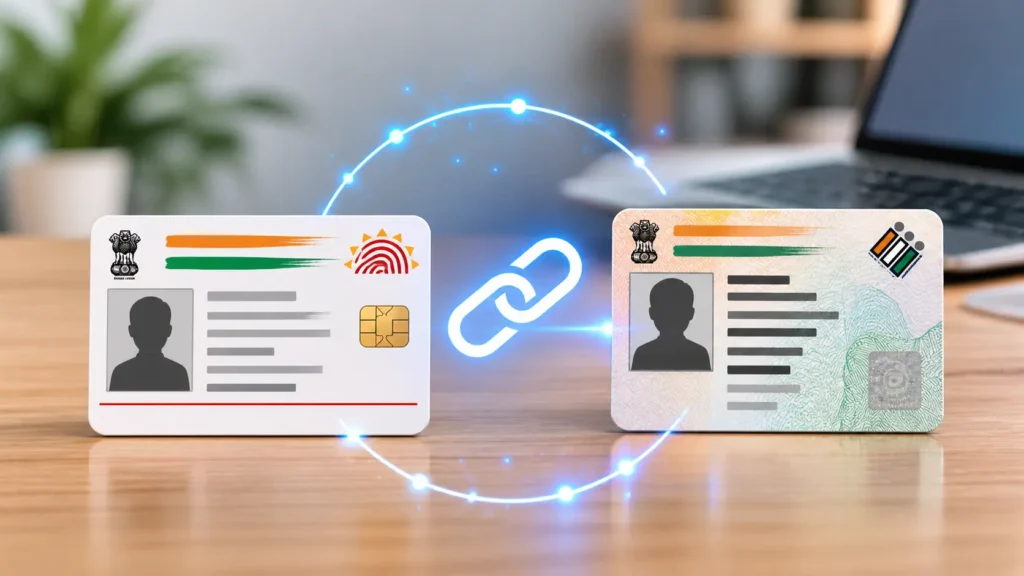
Once Aadhaar is linked with EPIC, users may more easily access digital voting services like e‑EPIC, online verification, and accurate polling information — which are increasingly relevant in modern democratic systems.
Criticisms and Concerns
Despite the potential advantages, Aadhaar-Voter ID Linking has generated substantial debate among policymakers, experts, and rights advocates.
Threat to Voter Privacy
Linking biometric and personal data raises privacy concerns in the absence of a comprehensive, enforceable data protection law in India. Critics argue that a centralized database combining electoral and biometric identifiers may pose risks of misuse or unauthorized access.
Fear of Disenfranchisement
Several political voices and civil rights activists believe that mandatory profiling based on Aadhaar may inadvertently exclude eligible citizens from voting — especially if technical or documentation issues occur. For instance, Supreme Court petitions noted that forms lacked clear options for those who decline to link Aadhaar due to privacy or personal reasons.
Debate over Eligibility versus Identity
Some leaders have argued that Aadhaar, even when linked to voter IDs, only proves identity or residency, not citizenship — which is central to voting eligibility. This has led to concerns about confusion between identity verification and the constitutional right to vote.
Technical and Database Reliability
Biometric authentication — though powerful — is not flawless. Past tests showed significant failure rates due to issues like worn fingerprints or poor scan capture, which could falsely prevent identification.
Political Dynamics and Public Debate
Aadhaar linkage has not escaped political contention. Some parties have expressed distrust of the process, viewing it as potential manipulation of voter lists or centralization of power. Others have broadly supported the cleanup of rolls to enhance transparency.
In certain media narratives, linking these major identification systems has been depicted as a potential double‑edged sword — enhancing integrity on one hand while possibly centralizing authority on the other.
What This Means for Voters: Practical Implications
Participation Voluntary But Encouraged
Though linking is voluntary, voters are encouraged to do so to contribute to cleaner electoral rolls and a more reliable voting experience. No one is supposed to lose voting rights for choosing not to provide their Aadhaar details.
How to Link Aadhaar with Voter ID
Citizens can use official portals, the Voter Helpline app, SMS to designated numbers, or visit electoral offices to submit Form 6B with their Aadhaar number. OTP verification is required for most online channels.
Ease and Accessibility
The government and ECI have assured that efforts are underway to make the process accessible and understandable for all demographic groups, including those without reliable internet access. Multiple submission channels aim to ensure inclusion.
Future Outlook and What’s Next
The ECI, in consultation with multiple government ministries, continues to analyze the implications of full database integration, legal architecture, and implementation standards. The focus remains on ensuring that the process enhances democratic principles without compromising individual rights.
Pending discussions and parliamentary reviews could eventually determine whether the initiative remains voluntary or takes on greater procedural weight. However, broad consensus suggests the need for a balanced approach that respects privacy, security, and democratic participation.
FAQs
Final Thoughts
Linking Aadhaar with Voter ID represents a bold attempt to modernize India’s electoral process through technological means. It has the potential to eliminate duplicate entries, reduce administrative discrepancies, and enhance verification integrity. However, it also raises critical questions about privacy, data security, and voter rights.
For any democratic reform of this magnitude, transparency, legal clarity, and public confidence are essential. As India moves forward with this initiative, policymakers and civil society must ensure that safeguards protect every voter’s core rights while nurturing electoral credibility.