Aadhaar Deactivation After Death: Report & Prevent Fraud
Aadhaar UIDAI— the 12‑digit identity issued by the Unique Identification Authority of India (UIDAI) — is woven into nearly every aspect of life in India, from opening bank accounts to accessing government benefits. But did you know that after a person’s death, their Aadhaar does not automatically deactivate? This can leave room for identity misuse, financial fraud and unauthorized access to services.
Deactivation safeguards the deceased’s digital identity, protects the family from potential fraud, and keeps India’s Aadhaar database accurate and trustworthy. In recent years, UIDAI has strengthened its processes and introduced online mechanisms to make this task easier.
Why Aadhaar Deactivation After Death Is Critical
Aadhaar remains active in UIDAI’s system even after someone passes away unless action is taken. Active Aadhaar numbers can be exploited for harmful purposes, including:
This not only risks financial and legal complications for the family but undermines trust in India’s identity ecosystem. To counter this, UIDAI undertakes large‑scale database maintenance — over 2 crore Aadhaar numbers of deceased persons have been deactivated through official records and family reporting.
Who Can Report a Death for Aadhaar Deactivation?
Typically, any immediate family member or legal heir can report a death on behalf of the deceased. UIDAI requires that the person initiating the request authenticate using their own Aadhaar, ensuring accountability and legitimacy.
Aadhaar Deactivation: Two Common Scenarios
1. Death Certificate With Aadhaar Details
If the death certificate already includes the Aadhaar number and the record is digitized within the Civil Registration System (CRS), UIDAI can automatically flag and deactivate the Aadhaar after verifying the death data.
2. Death Certificate Without Aadhaar Mention
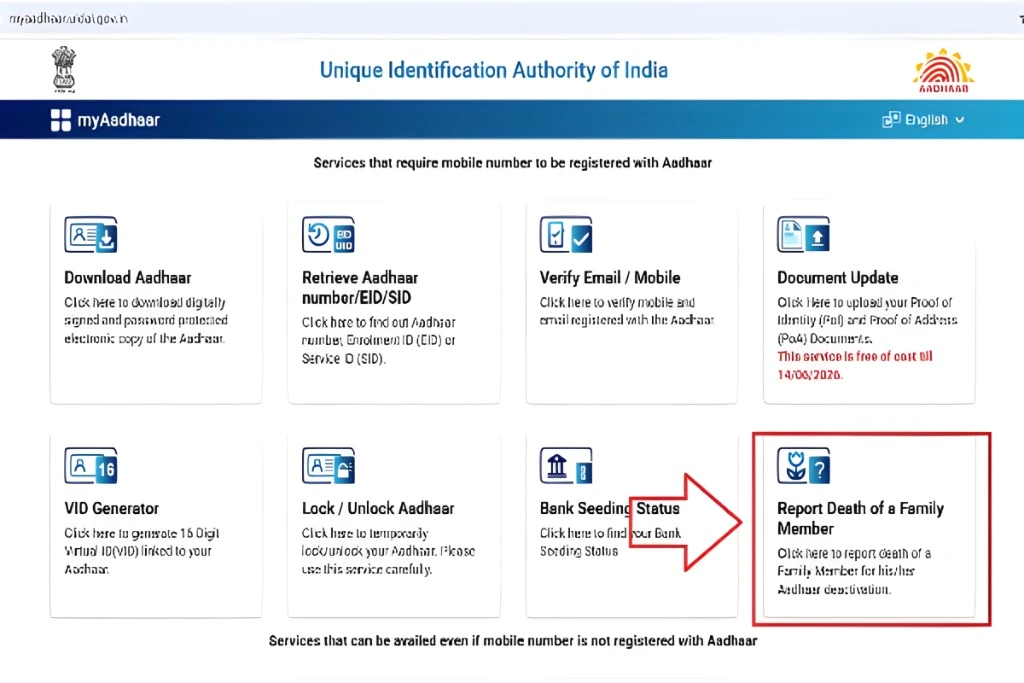
In many cases, Aadhaar isn’t listed on the death certificate. In such situations, the family must manually report the death online on the myAadhaar Portal, supplying the Aadhaar number and other required details. UIDAI then verifies the information with official registration data before marking the account inactive.
Step‑by‑Step Guide to Reporting Death on the myAadhaar Portal
Follow these steps to ensure the Aadhaar is deactivated securely and efficiently:
This online process is designed to be quick, paperless, and accessible, eliminating the need for visits to physical Aadhaar centres in most cases.
Timeline: What to Expect After Reporting
There’s no fixed deadline guaranteed, but in most cases once verified, Aadhaar can be marked inactive within a few weeks to months. If automatic CRS matching exists, the update can happen much faster.
How to Check Aadhaar Deactivation Status
Online Method
Offline Method
Can Aadhaar Be Reactivated After Deactivation?
Yes — in rare cases where Aadhaar was incorrectly deactivated due to erroneous death records, UIDAI allows reactivation requests. The individual must:
UIDAI reviews and processes reactivation, typically within 30 days.
Aadhaar and Filing Tax or Managing Finances After Death
Even after Aadhaar is deactivated due to death, legal heirs can still proceed with critical tasks like filing income tax returns on behalf of the deceased, usually using their PAN rather than Aadhaar. Certain formalities, such as closing bank accounts or processing insurance, may require temporary identity verification — in such cases, guidance from involved institutions helps determine next steps.
Extra Precautions to Prevent Misuse
Apart from reporting death, families can use features like biometric lock/unlock to temporarily block biometric authentication until full deactivation is complete. Awareness of such tools adds an additional layer of protection against identity misuse.
Key Takeaways
FAQs
Final Thoughts
Ensuring the Aadhaar of a deceased loved one is deactivated is a vital step toward protecting their legacy and preventing fraud. With modern online tools like the Report Death feature on the myAadhaar portal and extensive data integration efforts by UIDAI, families now have straightforward means to secure Aadhaar accounts effectively. Prompt reporting, accurate documentation, and regular status checks help uphold both personal privacy and the integrity of India’s national identity framework.